

Realism or rather Naturalism? Realistic style tattoos

Realism in art — and therefore also in tattooing, is an attempt to depict objects truthfully, without artificiality, exaggeration, speculative or supernatural elements. This term is often used as a synonym for naturalism, although the two are not always synonymous.
I.n.t.e.r.e.s.t.i.n.g.
…… Naturalism as an idea related with visual representation in Western art, seeks to depict objects with as little distortion as possible and is associated with the development of linear perspective and illusionism in Renaissance Europe. "The school of Naturalism claims that art is an expression of life in all its phases and at all levels, and that its sole purpose is to reproduce nature, bringing it to its maximum strength and intensity: it is truth balanced with science".
Goya’s portraits of the Spanish royal family are a kind of honest, unflattering depiction of important people.

….... Realism, although based on naturalistic representation, is nevertheless a departure from the idealization of earlier academic art, and often refers to a specific art‑historical movement that arose in France after the French Revolution of 1848, as a reaction against Romanticism and historical painting.
Supporting the depiction of "real" life, realist painters used simple workers and ordinary people in everyday settings as subjects in their works, engaged in real activities. For artists such as Gustave Courbet, by using the everyday, the ugly, or the dirty, realism motivated and r e n e w e d i n t e r e s t i n t h e c o m m o n p e r s o n and their daily life.


Realism, or Naturalism, as a style that depicts the non‑idealized version of a subject, can be used to represent any type of subject. Realism is a style, not a theme. Realistic tattoos are works of body art intended to look realistic. Only You choose — the subject can be anything!


Today, a realism tattoo is a style that strives to replicate objects as accurately as possible, similar to a high‑resolution photograph painted onto the skin. Under the concept of realistic tattooing, various distinct techniques have emerged: Photorealism; Realistic Portraits; Black‑and‑Grey Realism; Color Realism. Tattoo artists who specialize in this style use different techniques to create the illusion of reality on the skin. One of the fundamental techniques is smooth shading, which is essential for creating tones and textures that imitate the subtlety of real life. Artists must have a precise hand to blend gradients seamlessly, avoiding sharp lines that could interfere with achieving a realistic effect. Color theory is also very important, especially for color‑realism tattoos, where artists must understand how to mix and layer inks to create a wide range of tones and effects. In addition, a deep understanding of anatomy and proportions is required + strong knowledge of classical art color principles, which are refined through practical work on canvas rather than on Your skin.


Masterful shading and color blending are an essential part of the style; they are what give the tattoo its depth. Shading is not only a transition from light to dark, but also an understanding of how light interacts with different shapes and textures. It is about color blending — the ability to choose and mix ink so that it matches the subtle nuances of the skin, creating a spectrum of tones that can imitate anything from a soft blush on the cheek to the vivid feather of a bird. Additionally, contrast is an important proportion. A good tattoo contains 30% black, 30% shading, and 30% skin/highlights. This ensures that once healed, a realistic tattoo will look good. These elements are combined to form a unified and realistic image that withstands the test of time and brings the artwork to life on the skin.
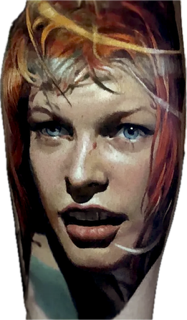


Creating a realism tattoo is like working on a fine art masterpiece, only on a different kind of canvas — your skin. These tattoos have prerequisites :) First, you must know how to draw. You need to understand volume, form, and the difference between sharp and blurred aspects, as well as possess knowledge of light and shadow, color theory, and anatomy. Not to mention the advanced tattooing skills and techniques required. The machines used during tattooing must be adjusted for a much softer stroke in order to better preserve the skin and reduce machine‑induced damage. The working technique itself must be very delicate; the process of creating a realistic tattoo is slightly, but noticeably, different from other types of tattooing.


For many years, the art of realistic tattoos has continued to evolve, developing alongside technological advancements. The origins of realism tattoos can be traced back to the late 20th century, when artists began experimenting with shading techniques and color transitions that created lifelike images on the skin. The emergence of more technologically advanced tattoo machines and inks further encouraged the development of the style, and by the early 21st century, realism tattoos had gained a stable and independent market niche and widespread popularity among You.
It is precisely these prerequisites that have allowed tattoo artists to explore and refine new techniques and textures, as well as to use different types of needles in the pursuit of perfection.
This is something to keep in mind !!!
These special methods that make a realism tattoo lifelike and so captivating to your eye also create additional risks. These same features make them susceptible to fading :(
Realistic‑looking tattoos are created with m i n i m a l l i n e w o r k , w h e r e the main requirement is extensive, gradual shading to produce the desired effect and achieve the play of light and shadow on the skin. In works where a minimal amount of black ink, light shading, and lower saturation are used, the degree of fading is greater. The shading simply is not embedded deeply enough into the skin to withstand the test of time and exposure to the sun. In cases where part of the tattoo is done in color, the black ink will hold up better than the other color tones in the tattoo, and this m a k e s c o l o r r e a l i s m t h e m o s t problematic tattoo style in the long term. To reduce contrast and saturate the bright colors, there is a solution Hyperrealism, which we will discuss in the next publication.

Be that as it may, such details will not stop you from choosing a tattoo done in the realism style. Its true beauty lies in the incredible details and the striking resemblance to its real‑life counterparts, and small things like fading will not hold you back. Today’s pigments are more stable, and the craft has its own nuances that a skilled tattoo artist keeps to themselves in order to create a beautiful and longer‑lasting realism tattoo that will age gradually together with You :)


P.S.

Realism tattoos are a blend of ancient art and modern tattooing techniques, where tattoo artists have created a space for aesthetics and beauty — qualities primarily embodied in the human body — to be developed and transformed into new tattoo styles. They offer a canvas that is not only personal, but also a living work of art that you can be proud of day after day.
A solid realism tattoo requires a deep understanding of drawing and painting fundamentals. This includes knowledge of perspective, light, shadow, and form. In addition, Your chosen tattoo artist must have an eye for detail, as this is precisely what sets a realism tattoo apart from other styles.
Stay observant and keep following us :) We work to ensure that You are well‑informed when choosing your next tattoo.
